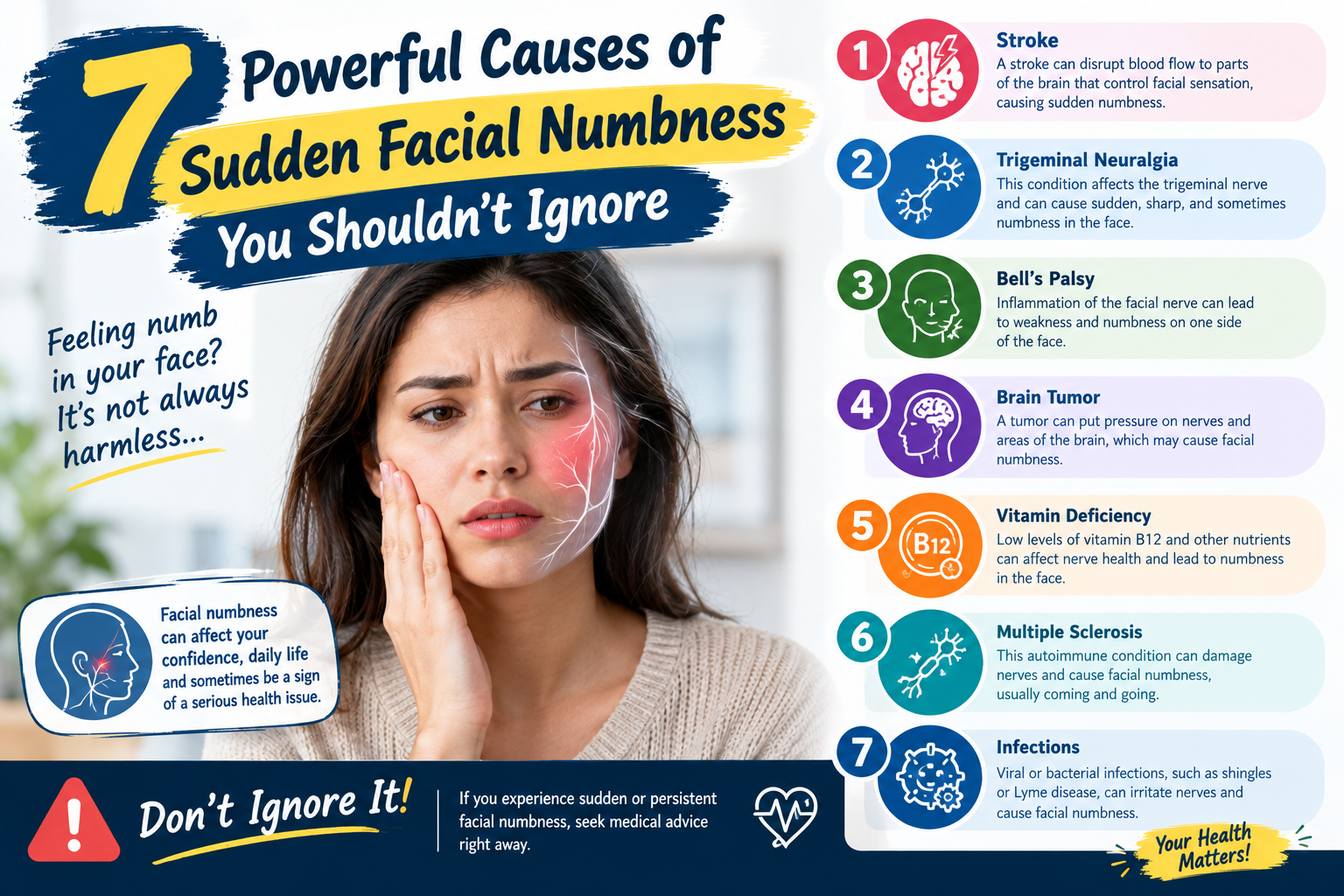
Sudden Facial Numbness can feel frightening, especially when it appears without warning. Sometimes facial numbness may come from a temporary nerve problem, migraine, or another less serious condition, but sudden numbness can also be linked to a stroke or transient ischemic attack (TIA). Because the causes can be very different, the timing, location, and other symptoms matter when trying to understand what may be happening.
Table of Contents
- What Sudden Facial Numbness Means
- 7 Causes of Sudden Facial Numbness
- Sudden Facial Numbness and Stroke
- How Doctors Find the Cause
- When Sudden Facial Numbness Needs Urgent Care
- Final Thoughts
What Sudden Facial Numbness Means
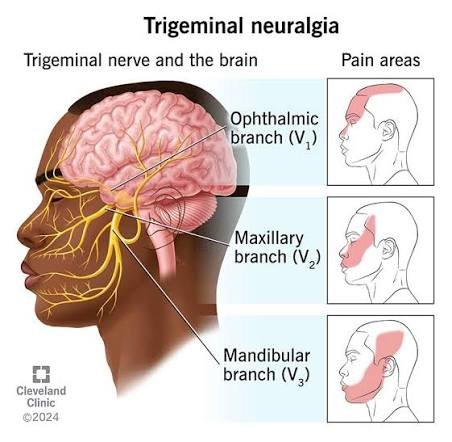
Sudden Facial Numbness means that part or all of the face suddenly feels less sensitive than normal. Some people describe numbness as a loss of feeling, while others experience tingling, pins and needles, burning, or an unusual sensation. Numbness can happen when a nerve is irritated, compressed, damaged, or when a problem affects the brain or spinal cord.
The location of the numbness can provide useful information. It may affect one cheek, the lips, the jaw, or an entire side of the face. Sometimes it happens alongside weakness or difficulty moving facial muscles. That distinction is important because weakness and numbness are not exactly the same symptom, even though people may use the words interchangeably.
A single episode does not automatically mean something dangerous is happening. However, facial numbness that begins suddenly, particularly when combined with other neurological symptoms, should not be casually dismissed.
7 Causes of Sudden Facial Numbness
1. Sudden Facial Numbness From a Stroke
One of the most important causes to consider is a stroke. A stroke can cause sudden numbness or weakness affecting the face, arm, or leg, particularly on one side of the body. Speech difficulties, vision changes, dizziness, balance problems, or a sudden severe headache can also occur.
If facial numbness starts suddenly and one side of the face droops, especially when accompanied by arm weakness or speech problems, emergency medical help is needed. The FAST approach is commonly used to recognize stroke symptoms: Face, Arms, Speech, and Time.
The important point is not to wait for the numbness to disappear. Stroke treatment can be time-sensitive, so sudden neurological symptoms require immediate assessment.
2. Sudden Facial Numbness From a Transient Ischemic Attack

A transient ischemic attack, or TIA, can produce symptoms similar to a stroke because blood flow to part of the brain is temporarily interrupted. Sudden facial numbness or weakness may occur, and the symptoms can disappear after a short period.
A common mistake is assuming that a symptom is harmless simply because it stopped. A TIA can be a warning that a person is at increased risk of a future stroke. For that reason, sudden facial numbness that disappears still deserves urgent medical evaluation when a TIA is possible.
3. Sudden Facial Numbness From Bell’s Palsy
Bell’s palsy affects the facial nerve and can cause sudden weakness or paralysis on one side of the face. A person may notice that one side of the mouth droops, one eye is difficult to close, or facial expressions become uneven. Changes in taste, drooling, or discomfort around the jaw or ear can also occur.
Bell’s palsy is different from a stroke, but the symptoms can look similar. This is why new facial weakness or paralysis should be medically assessed rather than self-diagnosed.
Treatment for Bell’s palsy can be more effective when started early, so getting medical advice promptly is important when symptoms appear.
4. Sudden Facial Numbness From Migraine Aura
Migraine is another possible cause of temporary neurological symptoms. Some people experience an aura before or during a migraine, and the aura can include numbness or pins-and-needles sensations on one side of the face or body. Speech or vision changes can also occur.
Migraine aura symptoms often develop gradually over several minutes and may resolve within about an hour. However, a new episode of facial numbness should not automatically be assumed to be migraine, particularly if the symptoms are sudden, severe, or different from previous migraine experiences.
A healthcare professional can help distinguish migraine-related symptoms from other neurological conditions.
5. Sudden Facial Numbness From Nerve Problems
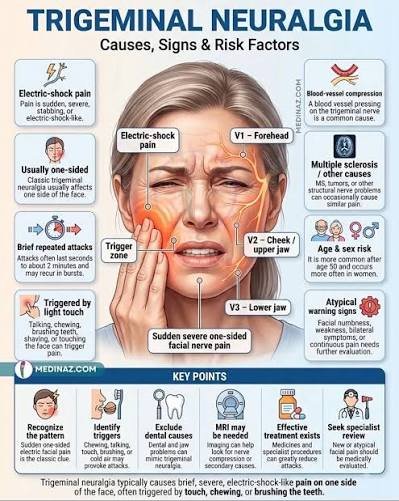
Facial sensation depends on nerves that carry signals between the face and the nervous system. If a nerve becomes irritated, compressed, or damaged, abnormal sensations such as numbness, tingling, or burning can develop. Nerve problems have many possible causes, including injuries and certain medical conditions.
For example, an injury affecting a nerve can interfere with normal sensation. Some conditions, including diabetes and certain autoimmune disorders, can also affect nerves. The exact cause cannot be determined from numbness alone, which is why persistent or recurring symptoms should be evaluated.
6. Sudden Facial Numbness From Shingles
Shingles can affect nerves and cause pain, burning, tingling, or changes in sensation. When the infection affects areas around the face, symptoms may develop in a specific region and may later be followed by a rash.
Because facial nerve symptoms can have several causes, unusual facial sensations should not automatically be attributed to shingles. A healthcare professional can assess the symptoms and determine whether treatment is needed.
7. Sudden Facial Numbness From Other Neurological Conditions
Less common neurological conditions can also cause numbness. Mayo Clinic notes that possible causes of numbness include multiple sclerosis, certain nerve disorders, tumors, infections, and other conditions affecting the nervous system.
This does not mean that facial numbness usually indicates one of these serious conditions. Most episodes have a range of possible explanations, and proper diagnosis depends on the person’s symptoms, medical history, examination, and sometimes imaging or other tests.
Sudden Facial Numbness and Stroke
Sudden Facial Numbness With Face Drooping
Sudden Facial Numbness becomes especially concerning when one side of the face suddenly becomes weak or droops. A simple smile test may reveal that one side of the mouth does not move normally. Stroke can also cause weakness or numbness in one arm or leg on the same side.
Sudden Facial Numbness With Speech Problems
Difficulty speaking, slurred speech, or trouble understanding words alongside facial numbness can be another warning sign of stroke. These symptoms require emergency medical attention.
Sudden Facial Numbness With Vision or Balance Changes
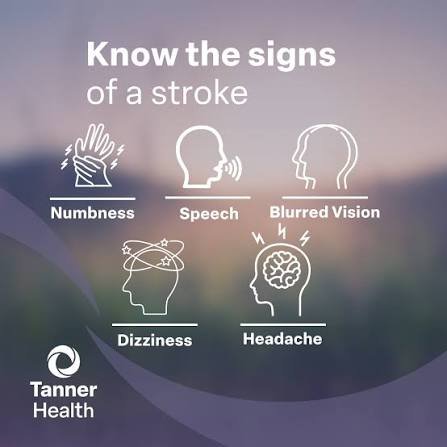
Sudden vision problems, dizziness, difficulty walking, or loss of balance can also occur during a stroke. If these symptoms appear together with facial numbness, waiting to see whether they disappear is not recommended.
Sudden Facial Numbness: Common Patterns
| Pattern | Possible Explanation | Importance |
|---|---|---|
| One-sided facial numbness with arm weakness | Stroke or TIA may be possible | Emergency assessment |
| Facial weakness with difficulty closing one eye | Bell’s palsy may be possible | Prompt medical evaluation |
| Gradual numbness with migraine symptoms | Migraine aura may be possible | Medical advice if new or unusual |
| Numbness with tingling or burning | Nerve irritation may be involved | Evaluation if persistent |
| Repeated or unexplained numbness | Several causes are possible | Medical assessment recommended |
This table is a general guide rather than a diagnostic tool. Symptoms can overlap between conditions, so a healthcare professional should determine the actual cause.
Sudden Facial Numbness: When to Seek Urgent Help
The chart above is an educational visualization, not a clinical scoring system. Sudden facial numbness combined with facial drooping, arm weakness, speech problems, severe dizziness, or other sudden neurological changes should be treated as an emergency because these can be stroke symptoms.
Even if the symptoms improve or disappear, urgent assessment may still be necessary because a TIA can produce temporary symptoms similar to a stroke.
How Doctors Find the Cause of Sudden Facial Numbness
Medical History and Neurological Examination
When a person reports Sudden Facial Numbness, a healthcare professional will usually want to know exactly when the symptoms started, how quickly they developed, which part of the face was affected, and whether other symptoms appeared at the same time.
The examination may include checking facial movements, sensation, speech, strength, coordination, and other neurological functions. These details can help distinguish between different possible causes.
Imaging and Other Tests for Sudden Facial Numbness
Depending on the symptoms, doctors may recommend additional tests. If stroke or another brain-related problem is suspected, imaging such as CT or MRI may be used. Other tests may be considered when nerve damage or another underlying condition is suspected.
The appropriate testing depends on the individual situation. There is no single test that can explain every episode of facial numbness.
How to Think About Sudden Facial Numbness
Not every episode of Sudden Facial Numbness means that a person is having a stroke. Migraine, Bell’s palsy, nerve irritation, shingles, and other conditions can produce facial sensory changes.
However, sudden onset makes the symptom more important to evaluate, particularly when it affects one side of the face or occurs with weakness, speech problems, vision changes, severe headache, dizziness, or difficulty walking.
Trying to diagnose the cause at home can be risky because several neurological conditions can produce similar symptoms. Paying attention to when the symptoms began and what other symptoms occurred can provide useful information to emergency responders and healthcare professionals.
Final Thoughts on Sudden Facial Numbness
Sudden Facial Numbness has many possible causes, ranging from migraine and nerve problems to Bell’s palsy, TIA, and stroke. The most important factor is the overall pattern of symptoms rather than numbness alone.
If facial numbness begins suddenly and is accompanied by facial drooping, arm weakness, speech difficulty, vision problems, severe dizziness, or another sudden neurological change, seek emergency medical care immediately. Even symptoms that disappear quickly may need urgent evaluation because a TIA can resemble a temporary stroke.
This article is for general educational purposes and does not replace professional medical diagnosis or treatment.
Leave a Reply