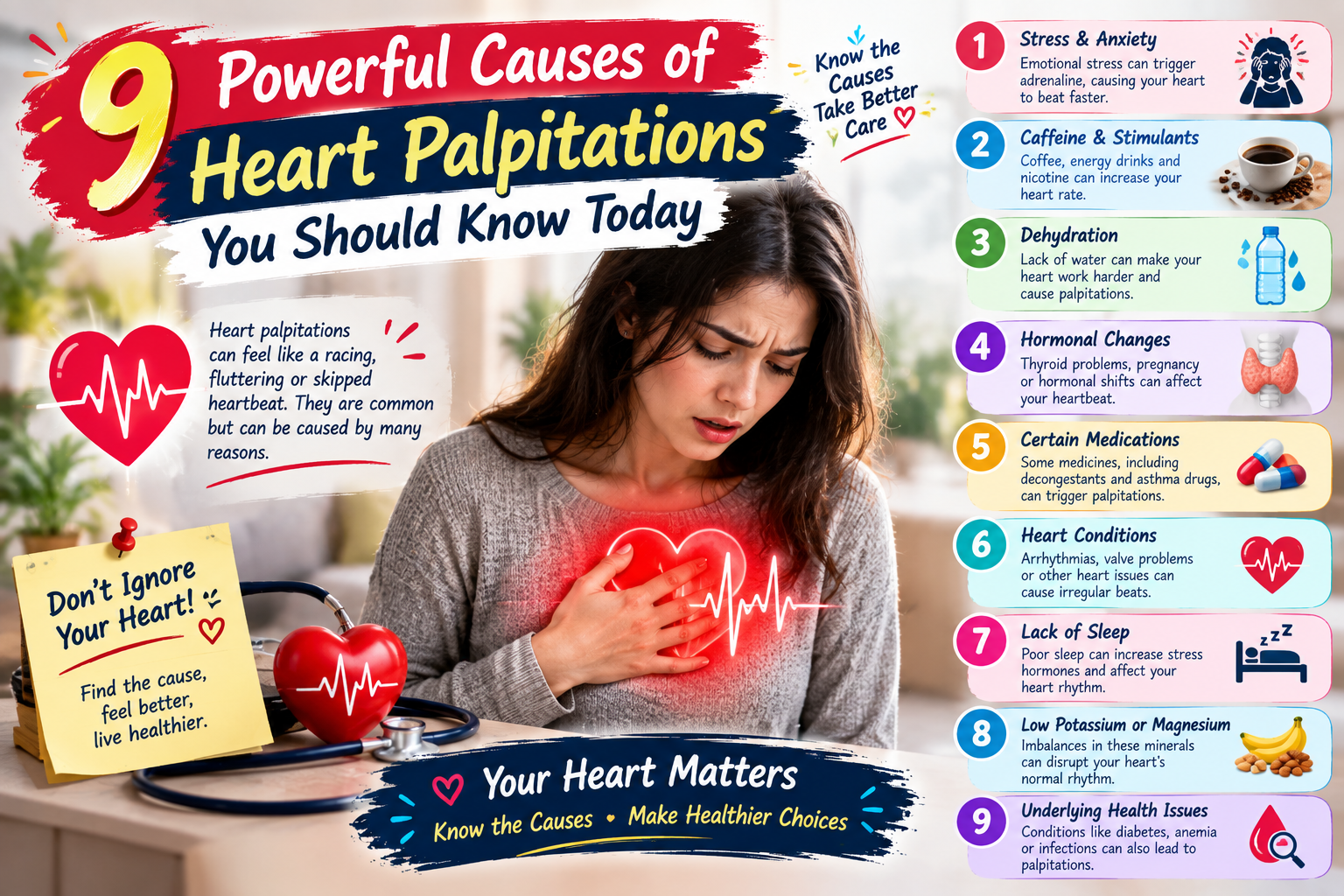
Heart Palpitations can feel like your heart is racing, pounding, fluttering, or suddenly skipping a beat. These sensations can happen while you are active, resting, or even trying to sleep. In many cases, heart palpitations are harmless and may be linked to everyday triggers such as stress, caffeine, lack of sleep, exercise, or certain medicines. However, recurring or unusual heart palpitations can sometimes be connected with an underlying health condition, so understanding the possible causes is important.
This guide explores nine common causes and explains what may trigger them, when they deserve medical attention, and what information can help you discuss them with a healthcare professional.
Table of Contents
- What Are Heart Palpitations?
- 9 Causes of Heart Palpitations
- Heart Palpitations Comparison Table
- When Heart Palpitations Need Medical Attention
- How Heart Palpitations May Be Evaluated
- Final Thoughts
What Are Heart Palpitations?
Heart Palpitations describe an increased awareness of your heartbeat. You may notice pounding in your chest, a fluttering sensation, a racing heartbeat, or the feeling that your heart has added or skipped a beat. Some people feel the sensation in the chest, while others notice it in the throat or neck. Palpitations can last for a few seconds, several minutes, or sometimes longer.
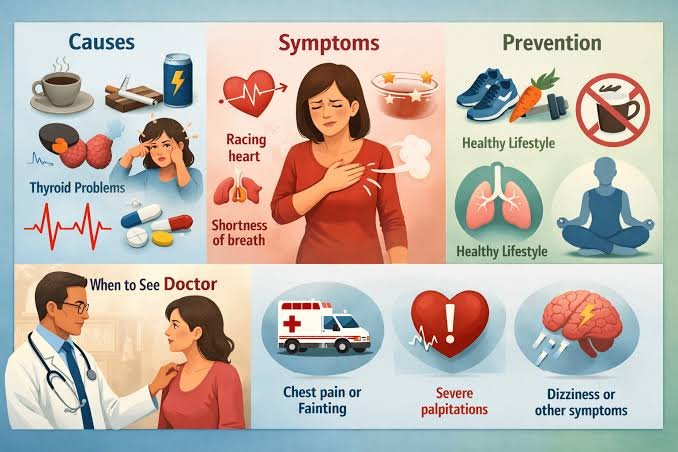
Having does not automatically mean that you have heart disease. They are common and are often caused by temporary changes in the body or nervous system. Still, the pattern matters. Palpitations that repeatedly return, become more frequent, last longer than usual, or occur with other symptoms should be discussed with a healthcare professional.
9 Causes of Heart Palpitations
1. Stress Can Trigger Heart Palpitations
Stress is one of the common reasons for When you feel stressed, your body releases hormones that prepare you to respond quickly. This can increase heart rate and make your heartbeat feel stronger or more noticeable.
Anxiety and panic can create a similar sensation. A person may suddenly notice their heart pounding during an emotionally difficult situation or after a stressful event. Once the stressful situation settles, the sensation may also decrease.
2. Caffeine May Cause Heart Palpitations
Caffeine can make some people more aware of their heartbeat. Coffee, tea, energy drinks, and some other caffeinated products may act as stimulants and can contribute to in sensitive people.
The response differs from person to person. Someone may drink caffeine regularly without noticing anything unusual, while another person may experience racing or fluttering sensations after a smaller amount. If you notice a clear connection between caffeine and palpitations, discussing your intake with a healthcare professional may be useful.
3. Lack of Sleep Can Affect Heart Palpitations
Poor or insufficient sleep can contribute to When your body does not get enough rest, stress responses can become more noticeable, and you may become more aware of changes in your heartbeat.
A few nights of disrupted sleep may be enough for some people to notice stronger or unusual heartbeat sensations. Improving sleep habits can help identify whether tiredness is contributing to the problem, although persistent palpitations should not automatically be blamed on sleep alone.
4. Certain Medicines Can Cause Heart Palpitations
Some medicines can contribute to Heart Palpitations, particularly products that contain stimulant ingredients. Certain cold and cough medicines, for example, can affect heart rate. Some asthma medicines and other medications may also influence heartbeat in certain people.
If your palpitations started after beginning a new medicine or changing a dose, do not stop prescribed medication on your own. Instead, speak with your doctor or pharmacist and ask whether the medicine could be contributing to the symptoms.
5. Hormonal Changes May Lead to Heart Palpitations
Hormonal changes can sometimes contribute to Heart Palpitations. Pregnancy, menstruation, and menopause are examples of situations in which hormone levels change and some people notice stronger or unusual heartbeat sensations.
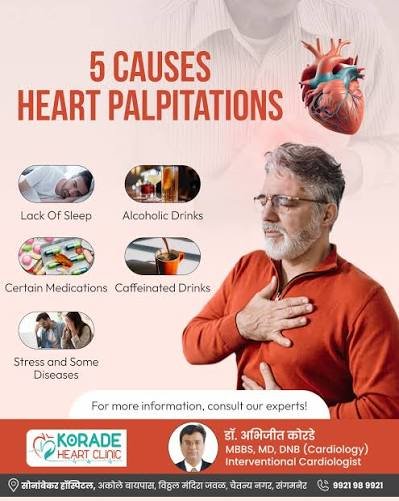
These sensations do not necessarily indicate a dangerous heart problem. However, if they are frequent, severe, or accompanied by other concerning symptoms, a medical evaluation can help determine whether hormones or another factor may be involved.
6. Thyroid Problems Can Cause Heart Palpitations
Your thyroid plays an important role in regulating metabolism and many body functions. Too much thyroid hormone can increase the body’s activity and may contribute to Heart Palpitations.
An overactive thyroid, also called hyperthyroidism, is a recognized possible cause of palpitations. Other symptoms may occur depending on the person and the underlying condition. If palpitations continue without an obvious trigger, a healthcare professional may consider thyroid problems among the possible causes.
7. Iron Deficiency Anemia May Be Linked to Heart Palpitations
Iron deficiency anemia can affect how much oxygen the blood carries around the body. In some cases, this may contribute to a faster or more noticeable heartbeat and result in Heart Palpitations.
The NHS lists iron deficiency anemia among conditions that can cause palpitations. If you regularly experience palpitations along with unusual tiredness or other symptoms, a healthcare professional can determine whether blood tests or additional evaluation are appropriate.
8. Alcohol, Nicotine, and Stimulants Can Trigger Heart Palpitations
Alcohol, nicotine, and certain recreational drugs can affect the heart’s electrical activity or increase heart rate. As a result, they can contribute to Heart Palpitations in some people. Caffeine is another commonly recognized stimulant.
If you notice that palpitations repeatedly appear after using a particular substance, that pattern is useful information to share with a healthcare professional. Avoiding known triggers may help in some cases, but repeated symptoms should still be evaluated when appropriate.
9. Heart Rhythm Problems Can Cause Heart Palpitations
Sometimes Heart Palpitations are related to an abnormal heart rhythm, known medically as an arrhythmia. Arrhythmias can make the heart beat too quickly, too slowly, or irregularly. Some are relatively harmless, while others require medical attention.
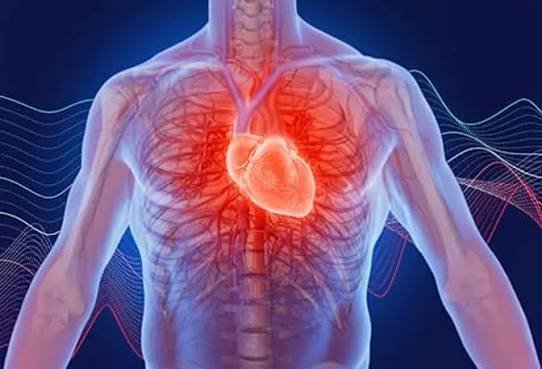
This is one reason recurring palpitations should not always be dismissed. If the sensation keeps returning, becomes worse, or occurs with dizziness, fainting, chest discomfort, or shortness of breath, medical evaluation becomes particularly important.
Heart Palpitations Comparison Table
| Possible Cause | Common Trigger or Connection | What to Consider |
|---|---|---|
| Stress | Emotional pressure or anxiety | Notice whether symptoms appear during stressful situations |
| Caffeine | Coffee, tea, energy drinks | Track whether symptoms follow caffeine intake |
| Poor Sleep | Insufficient or disrupted sleep | Improve sleep while monitoring recurring symptoms |
| Medicines | Some cold, cough, asthma, or other medicines | Ask a healthcare professional about possible side effects |
| Hormonal Changes | Pregnancy, menstruation, menopause | Consider whether symptoms follow hormonal changes |
| Thyroid Problems | Excess thyroid hormone | Medical testing may be needed |
| Iron Deficiency Anemia | Reduced oxygen-carrying capacity | A healthcare professional may recommend blood testing |
| Alcohol/Nicotine | Substance use | Identify repeated patterns or triggers |
| Arrhythmia | Abnormal heart rhythm | Recurring symptoms may require heart monitoring |
Heart Palpitations: What the Pattern May Tell You
The pattern of Heart Palpitations can provide useful information, although it cannot determine the cause by itself. For example, a brief sensation after caffeine or stress may have a different explanation from palpitations that repeatedly occur without an obvious trigger.
The chart above is illustrative rather than clinical data. It shows broad categories discussed in medical guidance, not the actual prevalence or risk of each cause.
When Heart Palpitations Need Medical Attention
Occasional Heart Palpitations that last only a few seconds and occur without other concerning symptoms are often not an emergency. However, recurring symptoms, symptoms that are becoming more frequent, or palpitations that last longer should be discussed with a healthcare professional.
Emergency medical attention is important when Heart Palpitations occur together with chest pain or discomfort, severe shortness of breath, fainting, or severe dizziness. These combinations can indicate a potentially serious problem and should not be ignored.
If someone is experiencing these serious symptoms right now, they should contact their local emergency service rather than trying to diagnose the cause themselves.
How Heart Palpitations May Be Evaluated
When Heart Palpitations keep returning, a healthcare professional may ask when they occur, how long they last, what the heartbeat feels like, and whether anything seems to trigger them. This history can help guide further evaluation.
Depending on the symptoms, an electrocardiogram, commonly called an ECG or EKG, may be used to examine the heart’s electrical activity. If palpitations do not happen during a standard ECG, longer monitoring such as a Holter monitor or event recorder may sometimes be considered. Other tests, including an echocardiogram, may be appropriate depending on the suspected cause.
Keeping a simple record of when Heart Palpitations happen can also be useful. Recording the time, activity, recent caffeine or alcohol intake, sleep quality, stress level, and other symptoms can give a healthcare professional more context.
How to Reduce Possible Heart Palpitations Triggers
Reducing known triggers may help some people experience fewer Heart Palpitations. Depending on the cause, this can include limiting caffeine, avoiding nicotine, moderating alcohol, getting adequate sleep, and using healthy stress-management techniques. Mayo Clinic also recommends avoiding stimulant-containing products when they are known to trigger symptoms.
These lifestyle measures should not replace medical evaluation when palpitations are persistent, worsening, or associated with concerning symptoms. The most useful approach is to understand the possible trigger while making sure an underlying medical condition is not being overlooked.
Final Thoughts on Heart Palpitations
Heart Palpitations can have many possible causes, ranging from temporary triggers such as stress, caffeine, poor sleep, and certain medicines to conditions involving the thyroid, blood, or heart rhythm. Most episodes are not automatically a sign of serious disease, but recurring or unusual symptoms deserve attention.
Understanding your triggers and keeping track of when symptoms happen can make a medical discussion more useful. Most importantly, Heart Palpitations accompanied by chest pain, severe breathing difficulty, fainting, or severe dizziness require urgent medical attention.
This article is for general education and does not replace an examination or diagnosis from a qualified healthcare professional.
Leave a Reply