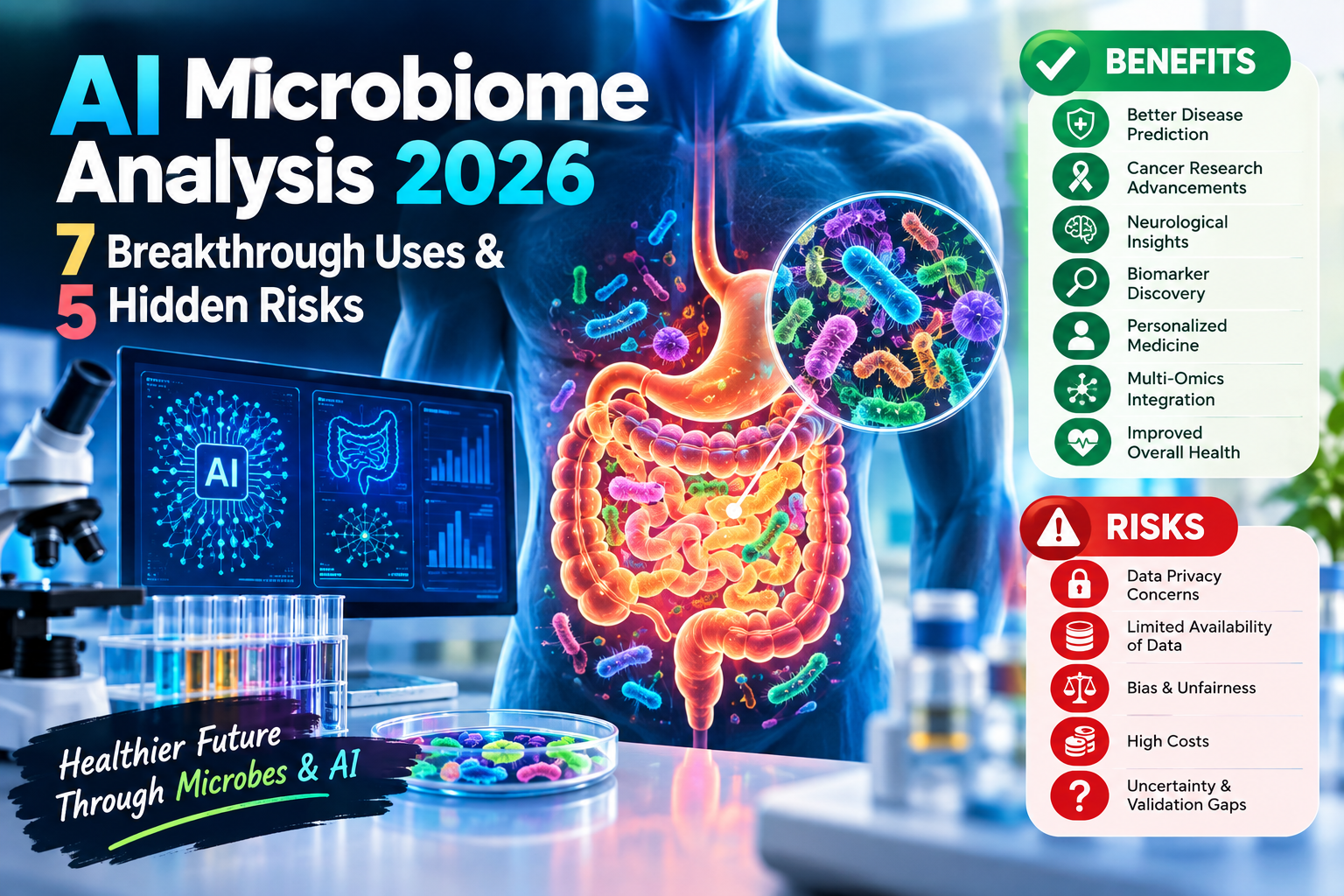
AI Microbiome Analysis 2026 is becoming an important research direction in modern medicine because artificial intelligence can help researchers study large and complex microbiome datasets more efficiently. Instead of looking at individual microbes separately, AI can examine patterns across microbial communities and connect them with diseases, biomarkers, and health conditions. Recent 2026 research is exploring AI for disease prediction, cancer research, neurological disorders, microbiome biomarkers, and multi-omics analysis.
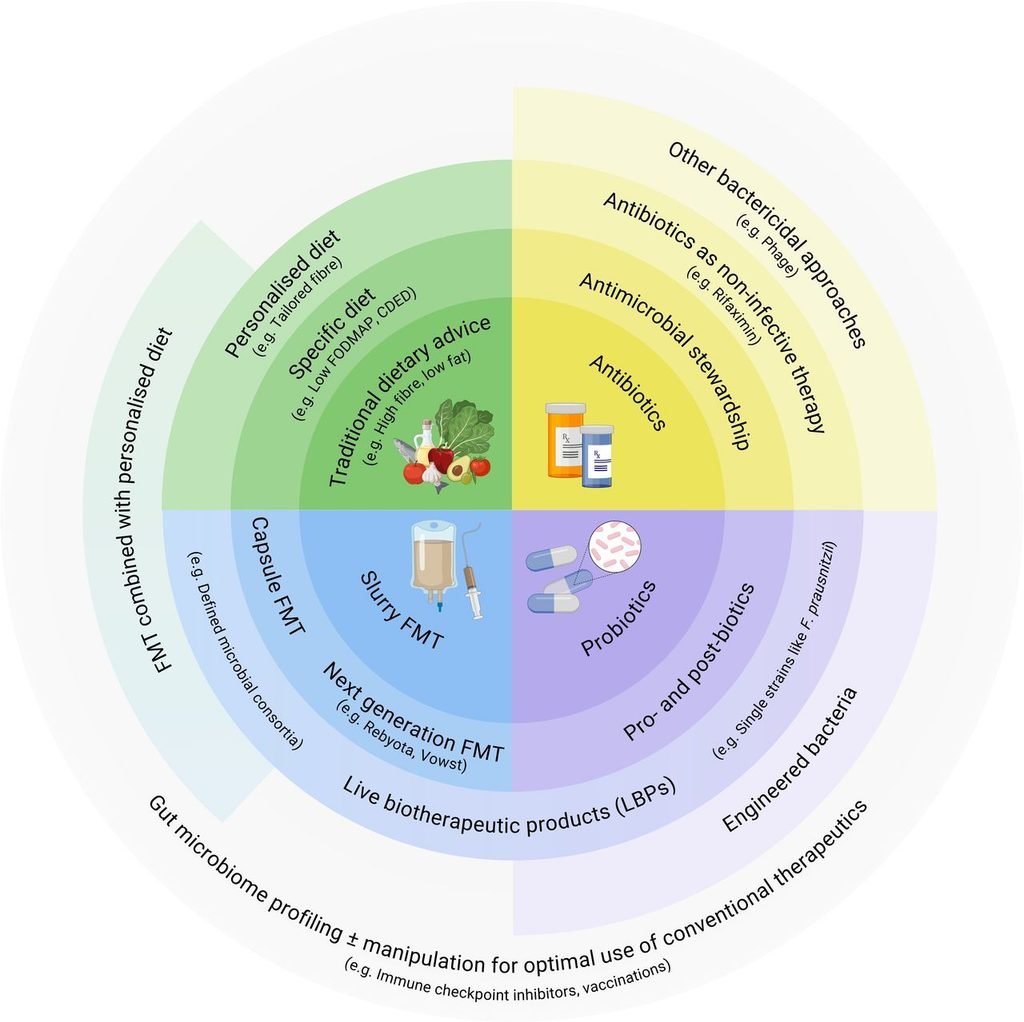
Table of Contents
- What Is AI Microbiome Analysis 2026?
- 7 Breakthrough Uses of AI Microbiome Analysis 2026
- How AI Microbiome Analysis 2026 Supports Disease Detection
- AI Microbiome Analysis 2026 and Personalized Medicine
- 5 Key Risks of AI Microbiome Analysis 2026
- Future of AI Microbiome Analysis 2026
- Conclusion
What Is AI Microbiome Analysis 2026?
AI Microbiome Analysis 2026 refers to the use of machine learning, deep learning, and related computational methods to study microbiome data. The microbiome contains communities of microorganisms that live in areas such as the gut, mouth, skin, and other parts of the body.
Modern sequencing technologies can produce very large datasets. AI can help researchers identify patterns within this information that may be difficult to detect manually. A 2026 review describes AI as a way to move microbiome research from mainly descriptive analysis toward predictive modelling and hypothesis generation.
This does not mean that AI can independently diagnose every disease. Most applications are still being researched and require clinical validation before they can become routine medical tools.
7 Breakthrough Uses of AI Microbiome Analysis 2026
1. AI Microbiome Analysis 2026 for Disease Prediction
One major use is identifying microbial patterns associated with disease. Machine-learning models can compare microbiome data from healthy and affected groups and search for combinations of microorganisms that may have diagnostic value.

For example, a 2026 study used multikingdom gut microbiome data and machine learning to distinguish people with multiple sclerosis from healthy controls across geographically diverse cohorts.
This type of research could eventually support earlier identification of disease risk, although more validation is needed.
2. AI Microbiome Analysis 2026 for Cancer Research
Cancer is another important area. Researchers are studying whether microbial patterns can help identify cancer-associated signatures or distinguish disease stages.
A 2026 Scientific Reports study compared machine-learning models for microbiome-based diagnosis and multi-class staging of colorectal cancer.
AI can potentially examine thousands of microbial features and determine which combinations deserve further investigation.
3. AI Microbiome Analysis 2026 for Neurological Conditions
The gut-brain connection has created another promising research direction. Scientists are investigating whether changes in gut microorganisms are associated with neurological conditions.
A 2026 scoping review examined how AI can be used to analyze gut microbiome information for dementia diagnosis.
Research has also explored microbiome patterns connected with Parkinson’s disease risk. Nature Medicine reported in 2026 that microbiome screening could identify patterns associated with higher Parkinson’s risk before symptoms appear, although this should not be interpreted as a standalone clinical test.
4. AI Microbiome Analysis 2026 for Biomarker Discovery
AI can help researchers search for microbial biomarkers. A biomarker is a measurable biological feature that may provide information about health or disease.
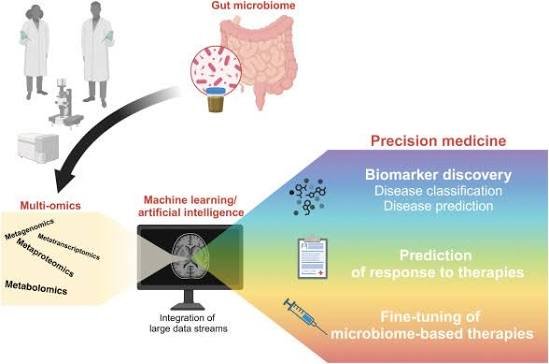
Instead of examining one microorganism at a time, machine-learning systems can evaluate combinations of bacteria, fungi, metabolites, and other biological signals.
Recent research has also investigated oral microbiome signatures and their relationship with biological age and host health, showing how microbiome data may provide useful non-invasive biological signals.
5. AI Microbiome Analysis 2026 for Multi-Omics Research
Modern medicine increasingly combines different types of biological data. These can include genomics, transcriptomics, proteomics, metabolomics, and microbiome information.
AI can help integrate these large datasets. A 2026 review of Crohn’s disease research discusses AI and machine learning approaches that combine host genetics, immunity, and gut microbiome information for diagnosis and personalized therapeutic research.
This approach may provide a broader view of how microbes interact with human biology.
6. AI Microbiome Analysis 2026 for Clinical Microbiology
AI is also being investigated beyond the gut microbiome. Clinical microbiology can use machine learning for areas such as microbial identification, genomic analysis, antimicrobial-resistance prediction, and diagnostic support.
A 2026 review reported that AI methods are increasingly being applied to molecular methods, genetic sequencing, metagenomics, antimicrobial-resistance prediction, and drug and vaccine discovery.
This creates a wider medical application for AI-powered microbial analysis.
7. AI Microbiome Analysis 2026 for Personalized Healthcare
Another long-term possibility is personalized healthcare. People can have different microbiome compositions, and those differences may influence disease risk, treatment response, and interactions between medicines and microbes.
AI may eventually help researchers identify patient-specific microbial patterns and combine them with other health information.
However, personalized microbiome medicine is still developing. Researchers need stronger validation, larger datasets, and better standardization before many models can be reliably used in routine healthcare.
AI Microbiome Analysis 2026 and Disease Detection
One of the most interesting aspects of AI Microbiome Analysis 2026 is its potential role in detecting disease-related patterns before obvious symptoms become severe.
AI models can process large microbiome datasets and search for relationships that might otherwise remain hidden. For example, current research is investigating microbiome-based prediction for multiple sclerosis, colorectal cancer, dementia, and other conditions.
However, association does not automatically mean causation. A microbial pattern may be connected with a disease without actually causing it. This distinction is one of the biggest scientific challenges in microbiome research.
AI Microbiome Analysis 2026 and Personalized Medicine
Personalized medicine is another important direction. AI could potentially combine microbiome information with genetic, clinical, and metabolic data to create more individualized health models.
The goal would not simply be to ask, “Which bacteria are present?” Instead, researchers could ask how the entire microbial ecosystem interacts with a person’s biological characteristics.
AI Microbiome Analysis 2026 and Multi-Omics Data
Multi-omics integration may make these models more comprehensive. Recent research highlights multi-omics and multicohort integration as promising approaches for improving microbiome research.
The challenge is that combining different datasets also increases complexity. Different laboratories may use different sampling methods, sequencing techniques, and analytical pipelines.
5 Key Risks of AI Microbiome Analysis 2026
1. AI Microbiome Analysis 2026 Can Face Data Bias
Microbiome data can vary according to diet, geography, age, medication use, lifestyle, and sampling methods. If an AI model is trained on a limited population, it may not work equally well for another population.
2. AI Microbiome Analysis 2026 Has Reproducibility Problems
Different studies can sometimes produce different results. A 2026 systematic review highlighted inconsistent validation, limited interpretability, and a lack of standardized reporting as important challenges in causal microbiome machine learning research.
3. AI Microbiome Analysis 2026 May Be Difficult to Explain
Some deep-learning models can be highly complex. A model might identify a microbial pattern without making it clear why that pattern matters biologically.
Interpretability is therefore important if these systems are eventually used to support medical decisions. Recent research specifically identifies model interpretability and generalisability as major challenges.
4. AI Microbiome Analysis 2026 Can Raise Privacy Concerns
Microbiome information is biological data. When it is combined with genetic or clinical information, privacy and data-security concerns become more important.
Researchers need appropriate safeguards when collecting, storing, sharing, and analyzing patient data.
5. AI Microbiome Analysis 2026 Is Not Yet a Universal Diagnostic Tool
AI models can show impressive results in research studies, but research performance does not automatically equal clinical reliability.
Large independent datasets, external validation, standardized methods, and prospective clinical studies are needed before many microbiome AI tools can be trusted for routine diagnosis.
Research Direction of AI Microbiome Analysis 2026
The following chart summarizes the selected 2026 research themes discussed in this article. It is a count of research examples reviewed here, not a measure of how common or clinically established each application is.
Future of AI Microbiome Analysis 2026
The future of AI Microbiome Analysis 2026 will likely depend on better data quality, stronger validation, explainable models, and larger international datasets.
Researchers are already developing more advanced deep-learning methods for microbiome data. For example, a 2026 Scientific Reports study introduced a taxonomically informed deep neural network designed specifically for microbiome analysis and disease prediction.
Another important direction is combining multiple types of microbiome information. Instead of focusing only on bacteria, future models may analyze bacteria, fungi, viruses, metabolites, host genetics, and clinical information together.
The biggest opportunity is therefore not simply making AI faster. It is making microbiome predictions more reliable, understandable, reproducible, and clinically useful.
Conclusion
AI Microbiome Analysis 2026 is creating a new research pathway between artificial intelligence, microbiology, and precision medicine. Its potential uses include disease prediction, cancer research, neurological research, biomarker discovery, multi-omics analysis, clinical microbiology, and personalized healthcare.
At the same time, important challenges remain. Data bias, reproducibility, privacy, model interpretation, and clinical validation must be addressed before many AI microbiome systems can move from research laboratories into everyday medical practice.
For now, the strongest opportunity is to use AI as a research and decision-support technology while continuing to validate its findings through high-quality biological and clinical studies.
Leave a Reply