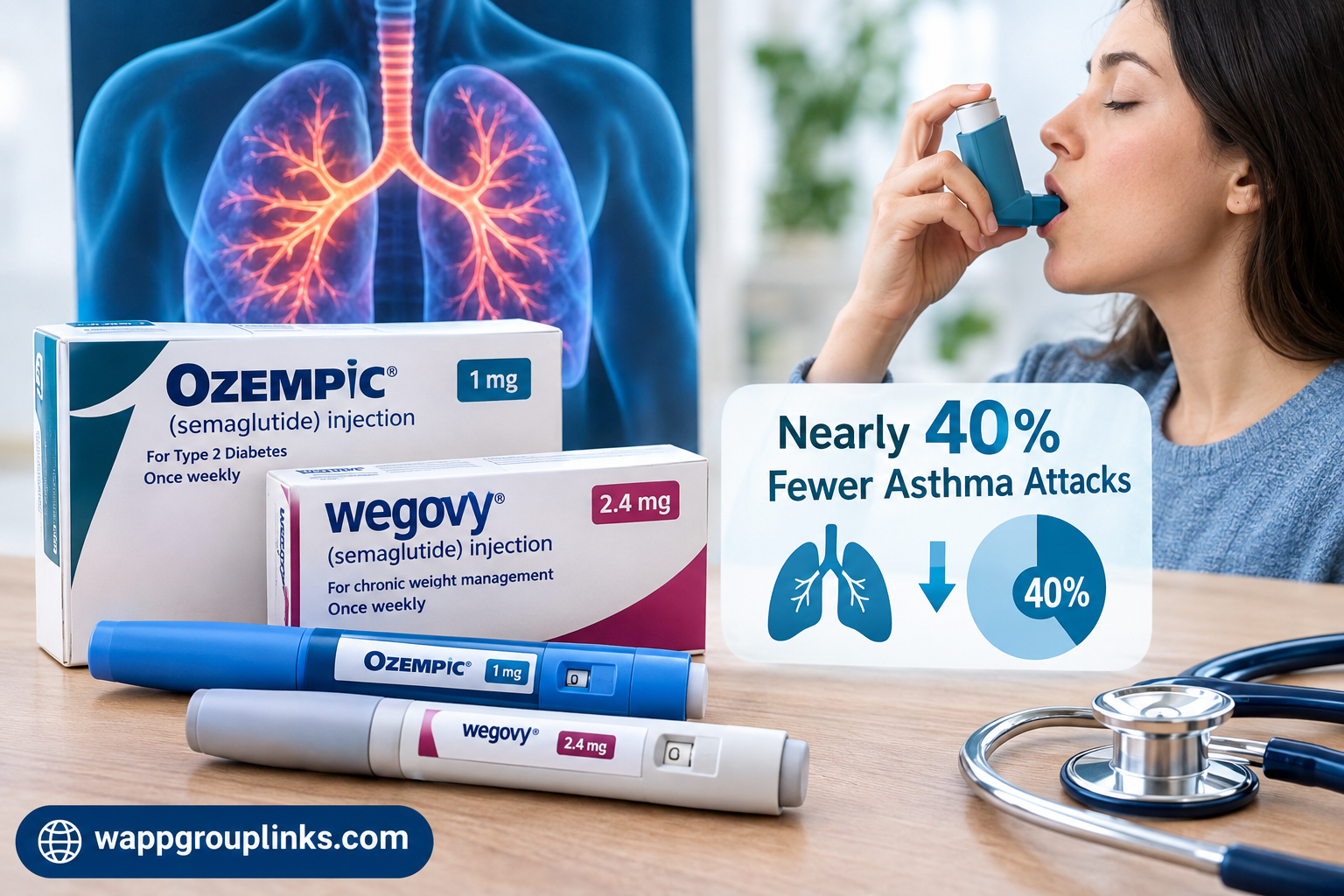
New research has revealed a potentially important connection between popular GLP-1 medicines and respiratory health. Ozempic and Wegovy, which contain the active ingredient semaglutide, have been linked with nearly 40% fewer asthma attacks in a large real-world study. The findings were presented at the European Respiratory Society Congress in Barcelona and have attracted attention because these medicines are primarily used for type 2 diabetes and obesity rather than asthma.

However, the findings should be interpreted carefully. The study was based on real-world health records, meaning that an association was identified rather than a direct cause-and-effect relationship being proven. Therefore, people with asthma should not start or change medication because of this research alone.
Table of Contents
- What the New Research Found
- Why Semaglutide May Affect Asthma
- The Connection Between Obesity and Asthma
- What Makes the Nearly 40% Reduction Important?
- Ozempic and Wegovy and Respiratory Health
- What Earlier Research Has Shown
- Important Limitations of the Study
- Simple Research Data Overview
- Could GLP-1 Medicines Become Part of Asthma Care?
- What Patients Should Know
- Frequently Asked Questions
- Conclusion
What the New Research Found
The latest research was led by researchers from Imperial College London’s National Heart and Lung Institute. UK health records were examined to investigate whether people with asthma or chronic obstructive pulmonary disease experienced fewer acute respiratory attacks after starting GLP-1 receptor agonists.
Ozempic and Wegovy Among the medicines examined, semaglutide appeared to produce the strongest association with improved respiratory outcomes. According to the researchers, asthma attacks were reduced by nearly 40% among people using semaglutide. A reduction of about 20% in COPD flare-ups was also reported.
The findings are especially interesting because Ozempic and Wegovy both contain semaglutide, although they are approved for different medical purposes. Ozempic is primarily used for type 2 diabetes, while Wegovy is used for chronic weight management.
Nevertheless, it should be emphasized that the research does not show that Ozempic and Wegovy directly cure asthma. Instead, a potentially beneficial association has been observed and now needs to be tested in controlled clinical trials.
Why Semaglutide May Affect Asthma
Semaglutide belongs to a group of medicines called GLP-1 receptor agonists. These medicines work partly by affecting appetite, blood sugar regulation, digestion and feelings of fullness.
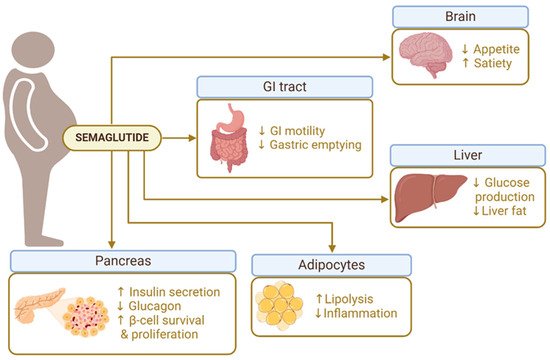
Interestingly, their possible respiratory effects may involve more than weight loss alone. Previous research has suggested that GLP-1 receptor agonists may have anti-inflammatory effects and could influence biological pathways involved in respiratory disease.
Because inflammation plays a central role in many forms of asthma, researchers are interested in whether metabolic medicines could indirectly influence airway inflammation.
However, the exact biological mechanism has not yet been established. Therefore, the respiratory benefit observed with Ozempic and Wegovy should currently be considered an important research finding rather than a confirmed asthma treatment effect.
The Connection Between Obesity and Asthma
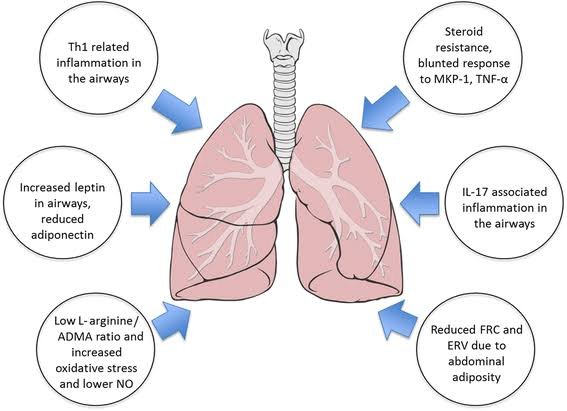
One reason the findings have attracted attention is the established connection between metabolic health and respiratory disease.
Obesity can affect breathing mechanics, inflammation and the overall burden of respiratory symptoms. At the same time, asthma can make physical activity more difficult for some individuals, potentially creating a cycle in which reduced activity and weight gain reinforce each other.
Because semaglutide can produce significant weight loss in appropriate patients, respiratory improvements could potentially be influenced by changes in body weight as well as other biological effects.
For Ozempic and Wegovy, this creates an interesting research question: are fewer asthma attacks being associated mainly with weight reduction, direct anti-inflammatory pathways, improved metabolic health, or a combination of several factors?
At present, that question cannot be answered conclusively.
What Makes the Nearly 40% Reduction Important?
Asthma attacks can be serious. During an exacerbation, breathing may become more difficult, coughing and wheezing can increase, and urgent medical treatment may sometimes be required.
Therefore, a reduction approaching 40% would be clinically meaningful if it were confirmed through randomized clinical trials.
The researchers have emphasized that the results are encouraging but should not immediately change treatment decisions. Additional research will be needed before semaglutide can be considered specifically for respiratory disease.
The potential benefit also appeared to be stronger among people with more pronounced asthma and among individuals receiving higher doses, according to reports on the study.
Still, dosage should never be changed independently. Prescription medicines should be used only according to a qualified healthcare professional’s advice.
Ozempic and Wegovy and Respiratory Health
The possible respiratory connection involving Ozempic and Wegovy is part of a broader research trend surrounding GLP-1 medicines.
Earlier studies had already suggested that GLP-1 receptor agonists could be associated with fewer asthma exacerbations. For example, research involving adults with asthma and type 2 diabetes found fewer asthma exacerbations among people starting GLP-1 receptor agonists compared with several other diabetes medicines.
More recently, research involving adolescents with obesity found that GLP-1 receptor agonist use was associated with fewer acute asthma exacerbations over 12 months. In that study, acute exacerbations occurred in 5.4% of the GLP-1 group compared with 10.7% of the control group.
These findings do not prove that semaglutide itself is responsible for every observed improvement. Nevertheless, they add to growing scientific interest in the relationship between metabolic medicines and respiratory disease.
What Earlier Research Has Shown
The potential relationship is not entirely new. Previous observational research has repeatedly suggested that GLP-1 receptor agonists may be associated with lower asthma exacerbation rates in certain populations.
One study found that patients with more severe asthma appeared to experience greater absolute reductions in exacerbation risk when GLP-1 receptor agonists were compared with certain diabetes treatments.
Consequently, the new findings involving Ozempic and Wegovy are being viewed as part of a developing body of evidence rather than an isolated discovery.
At the same time, observational studies have limitations. Differences in patients’ age, weight, diabetes status, asthma severity, healthcare access and other treatments can influence outcomes.
Important Limitations of the Study
Although the results are promising, several limitations should be remembered.
First, real-world health records were analyzed rather than participants being randomly assigned to semaglutide or placebo. Therefore, causation cannot be established.
Second, people receiving GLP-1 medicines may differ from people receiving other medications in important ways. Their weight, metabolic health, healthcare use and lifestyle may be different.
Third, the research was presented at a scientific meeting, and further detailed peer-reviewed evidence will be important for evaluating the findings.
Finally, Ozempic and Wegovy were not studied as dedicated asthma medicines. Their approved uses remain focused on diabetes and weight management, depending on the specific product and regulatory indication.
Simple Research Data Overview
| Research finding | Reported result |
|---|---|
| Asthma attacks with semaglutide | Nearly 40% fewer |
| COPD flare-ups | About 20% fewer |
| Stronger benefit | More pronounced asthma |
| Research type | Real-world health records |
| Main ingredient | Semaglutide |
| Current asthma status | Further trials needed |
Simple Visual Graph
Reported association with respiratory attacks
Asthma attacks
████████████████████ 100% baseline
████████████ 60–62% after association
COPD flare-ups
████████████████████ 100% baseline
████████████████ 80% after association
These bars are a simplified illustration of the reported relative reductions and should not be interpreted as individual patient risk.
Could GLP-1 Medicines Become Part of Asthma Care?
It is too early to say whether Ozempic and Wegovy will eventually have a role in asthma management.
If future randomized clinical trials confirm the respiratory benefits, however, the implications could be significant. Treatment could potentially be tailored around multiple interconnected conditions, particularly for people who have obesity, metabolic dysfunction and asthma at the same time.
Researchers have also called for future trials to measure respiratory outcomes such as asthma attacks, COPD exacerbations, lung function, symptoms and quality of life.
Such trials would be important because they could determine whether the observed association is caused by semaglutide itself or by related improvements in metabolic health and body weight.
What Patients Should Know
People currently using Ozempic and Wegovy should not stop their medication because of concerns about asthma or increase their dose because of the new findings.
Similarly, people with asthma should not request semaglutide solely as an asthma treatment based on this study.
Instead, established asthma treatments should continue to be followed as prescribed. Inhalers and other medications should be adjusted only with professional medical guidance.
The research is nevertheless encouraging because it suggests that respiratory health may be more closely connected to metabolic health than previously appreciated.
Frequently Asked Questions
Can Ozempic reduce asthma attacks?
The latest research suggests that semaglutide may be associated with fewer asthma attacks, with a reduction of nearly 40% reported in the new real-world study. However, a direct causal effect has not yet been proven.
Is Wegovy an asthma treatment?
No. Wegovy is not currently established as a treatment for asthma. The new evidence is preliminary and further clinical trials are required.
What is the active ingredient in Ozempic and Wegovy?
Both Ozempic and Wegovy contain semaglutide as their active ingredient, although their approved indications and dosing schedules differ.
Why could semaglutide help people with asthma?
Several explanations are being investigated, including weight reduction, improved metabolic health and possible anti-inflammatory effects. However, the exact mechanism remains uncertain.
Should asthma patients start semaglutide?
No medication should be started specifically for asthma based on this observational research alone. A healthcare professional should determine whether semaglutide is appropriate for an individual’s approved medical indication.
Conclusion
The emerging evidence surrounding Ozempic and Wegovy has opened an intriguing new area of respiratory research. Semaglutide was associated with nearly 40% fewer asthma attacks and approximately 20% fewer COPD flare-ups in the latest real-world analysis.
Importantly, these findings are promising rather than definitive. The research does not establish that semaglutide directly prevents asthma attacks, and it should not yet be considered an asthma medication.
Nevertheless, the results strengthen the scientific case for studying the connection between metabolic health, obesity, inflammation and respiratory disease. If controlled clinical trials confirm the findings, GLP-1 medicines could eventually become an important part of a broader approach to patients who have both metabolic and respiratory conditions.
For now, Ozempic and Wegovy should be viewed as medicines with an intriguing potential respiratory benefit that still requires careful scientific confirmation.
Leave a Reply